
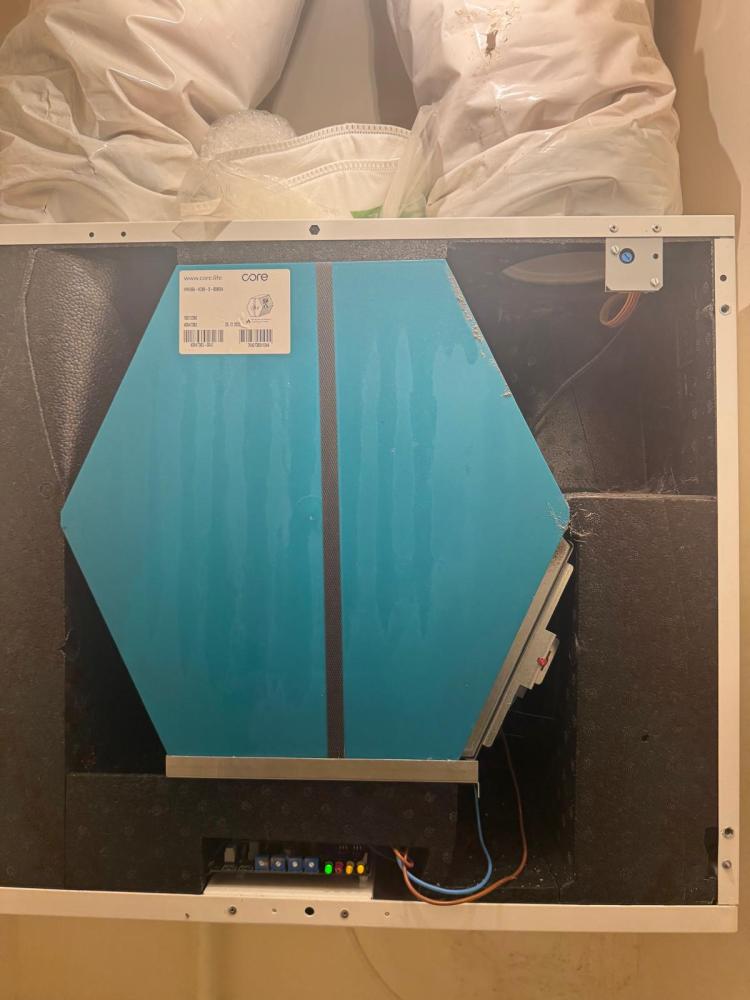
At ARC Facilities, we regularly deal with MVHR fan failures. And the more we see, the more convinced we are that a significant number of the £3,000–£3,500 full-unit replacements sold to property owners every year are entirely unnecessary.
MVHR (Mechanical Ventilation and Heat Recovery) systems are engineered to maintain air quality and thermal efficiency across residential and commercial buildings. When working correctly, they reclaim heat from outgoing air and use it to warm incoming fresh air — reducing energy demand, improving indoor air quality, and lowering heating bills.
But there is a pattern that engineers in this field recognise all too well. Somewhere around the seven-year mark — almost always just after the manufacturer’s warranty expires — the fans inside these units begin to fail. The unit stops performing. Occupants notice poor air quality, unusual noise, or a complete shutdown of the system.
At that point, the advice they typically receive is: time for a new unit.
The cost? Usually between £3,000 and £3,500 once you factor in the replacement unit, installation labour, and disposal of the old system.
Let us be direct about something the industry rarely discusses openly: this pattern is not accidental.
MVHR units — like many modern appliances — are increasingly engineered around components that are designed to have a finite, predictable lifespan. The fans and motor assemblies within many popular MVHR systems are built to a quality threshold that conveniently aligns with the warranty period. Once the warranty has expired, the manufacturer carries no obligation, and the occupant is left facing a significant bill.
This is planned obsolescence in action. It serves one purpose: to ensure that units are disposed of and replaced on a cycle that keeps manufacturer revenues flowing. The environmental cost of discarding an otherwise functional unit — one whose casing, heat exchanger, and controls may have years of life left — is rarely part of that commercial calculation.
The result? Property owners across London and the wider UK are spending money they do not need to spend, and functional equipment is ending up in landfill when it should be repaired.
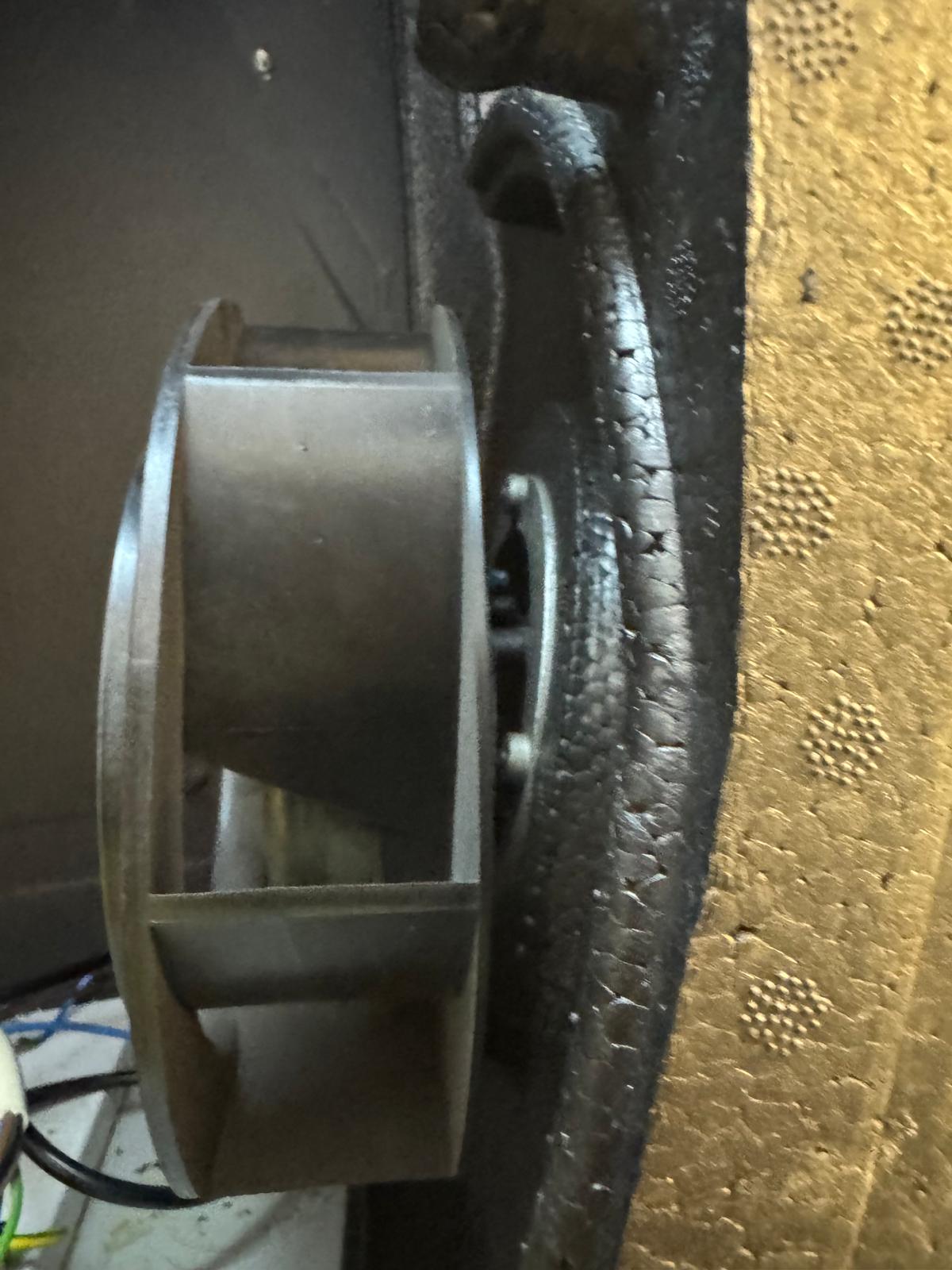
Here is what ARC Facilities wants property owners, landlords, estate agents, and facilities managers to understand: in the majority of MVHR fan failure cases, the unit itself does not need to be replaced.
The fan — or in some cases the fan motor — is the component that fails. It is a serviceable, replaceable part. Our engineers are trained and experienced in diagnosing MVHR fan failures across all major brands, including Vent-Axia, Nuaire, Zehnder, Titon, Airflow, EnviroVent, and many others. Where a fan replacement or repair is the appropriate fix, that is what we do.
The cost difference is substantial. A targeted fan repair or component replacement comes in at a fraction of the £3,000–£3,500 being quoted for full unit swaps. The system continues to operate. The building occupants continue to benefit from proper ventilation and heat recovery. Nothing goes to waste.
This is not a workaround. It is the correct engineering response to the actual fault.
The better outcome, of course, is never getting to the point of failure in the first place.
At ARC Facilities, we design bespoke maintenance schedules for MVHR systems that are built around the real-world demands placed on each unit — the size of the building, the frequency of use, the local environment, and the brand and model of the system. Rather than servicing to a generic schedule, we account for the specific factors that accelerate wear on fans and motors.
Proper MVHR maintenance — carried out on a planned, regular basis — removes the debris and strain that causes fan components to degrade prematurely. Filters are checked and replaced. Fan bearings and motor housings are inspected. Performance benchmarks are recorded so that any drift from optimum operation is identified early, well before it develops into a fault.
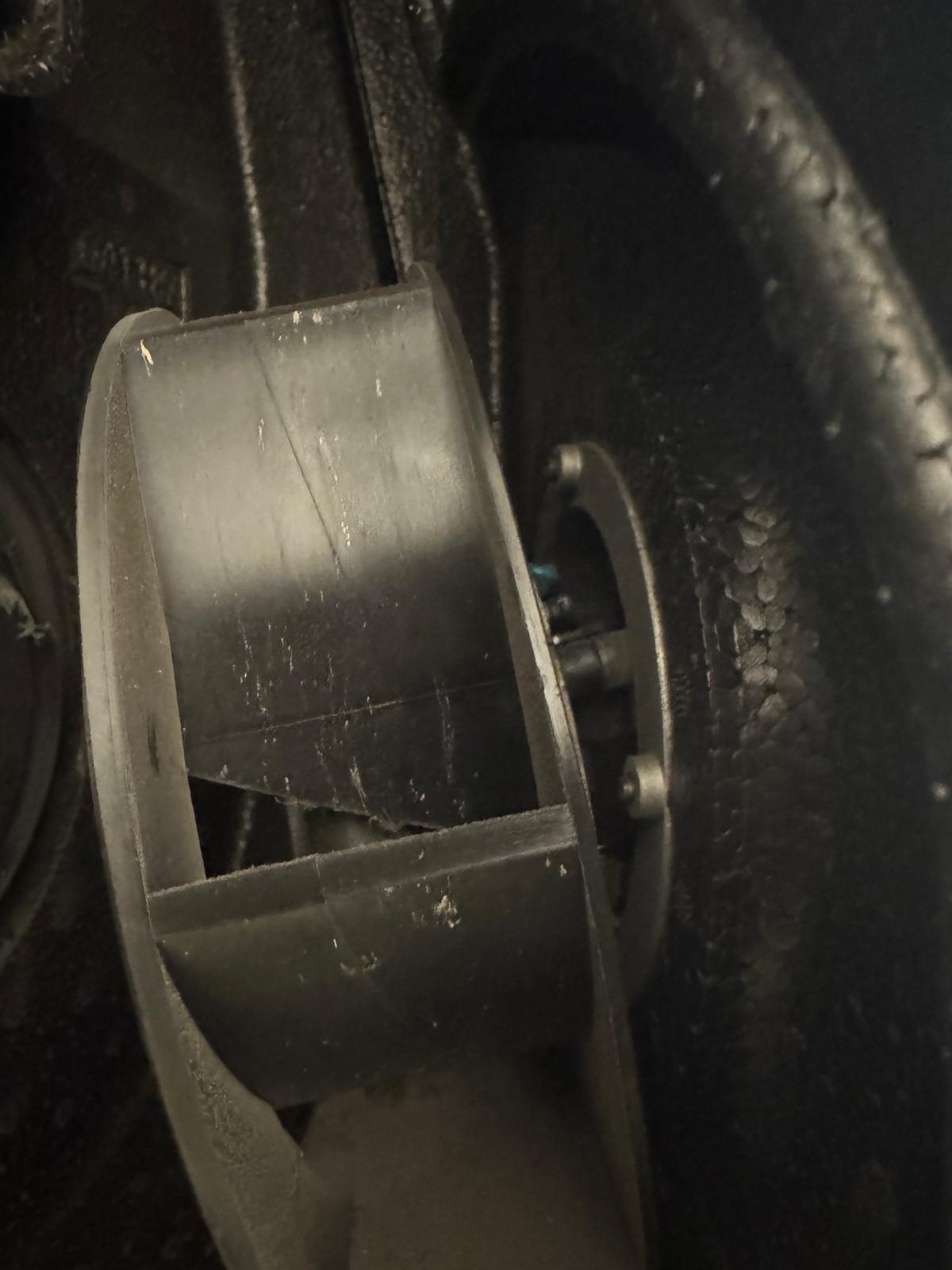
The result is MVHR systems that operate significantly beyond the seven-year threshold that manufacturers engineer into their warranty calculations. Units that, without a maintenance programme, might fail at year seven or eight are routinely kept in full working order for twelve, fifteen, or more years.
This is what a genuine commitment to sustainability looks like in practice. Not disposing of equipment on a manufacturer’s preferred cycle, but extending its serviceable life through intelligent, proactive maintenance.
The decision to repair rather than replace is not simply a financial one — though the financial case is compelling. It is also the right decision from an environmental standpoint.
Manufacturing an MVHR unit incurs significant carbon and material costs. When a unit is discarded because a single fan component has failed, that manufacturing cost is effectively written off, and the process begins again. The embodied carbon in the discarded unit contributes nothing to the building’s energy performance going forward.
ARC Facilities holds TrustMark accreditation and is recognised as a Retrofit Assessor and Energy Coordinator. Sustainability is not a marketing position for us — it is the framework within which we make every operational and engineering decision. Repairing functional equipment rather than replacing it is entirely consistent with the low-carbon, resource-conscious approach that our clients increasingly expect and that the built environment urgently needs.
If your MVHR unit is approaching seven years old, or if you are already experiencing symptoms — reduced airflow, increased noise, unusual smells, or a system that has shut down entirely — do not commit to a full replacement until you have had an independent assessment.
At ARC Facilities, we offer MVHR inspections and diagnostics across London and the surrounding areas. Our engineers will assess the actual fault, explain clearly what has failed and why, and give you an honest recommendation. In many cases, that recommendation will be a repair that costs significantly less than the replacement quote you may have already received.
We also work with property managers, estate agents, and landlords to establish ongoing MVHR maintenance programmes — structured schedules designed to keep systems operating at peak efficiency and to prevent age-related failures that lead to unnecessary replacement costs.
To speak with one of our engineers or to arrange an inspection, contact ARC Facilities:
Phone: +44 20 3673 8895 Website: arcfacilities.co.uk
Your MVHR system may have far more life left in it than you have been led to believe. Let us show you what proper maintenance and expert repair can do.
ARC Facilities is a TrustMark-accredited, CHAS and SSIP-certified building engineering and facilities management company based in London. We specialise in HVAC maintenance and repair, including MVHR systems, across residential and commercial properties.